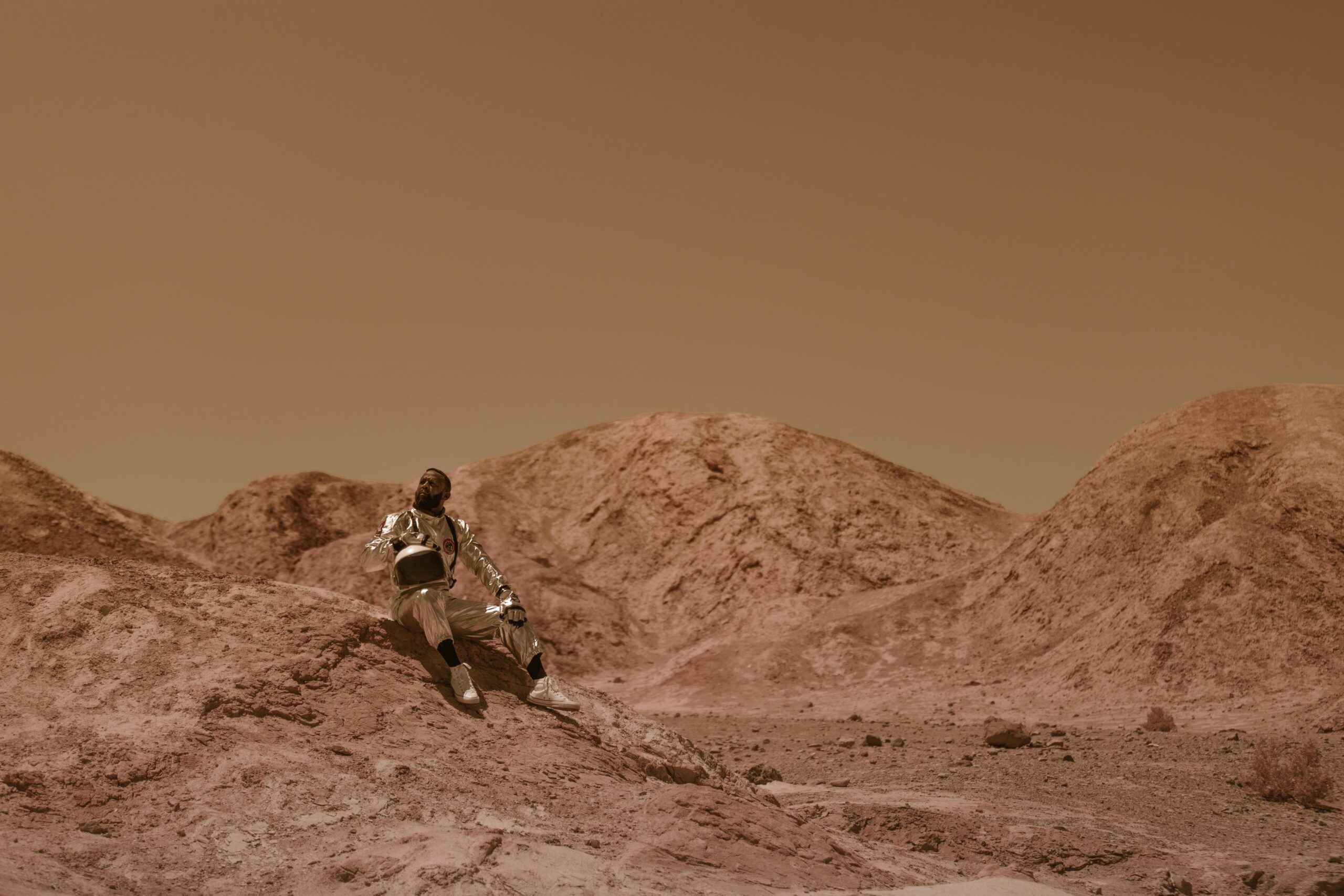
The dream of living beyond Earth has transitioned from science fiction to serious scientific discourse, sparking passionate debates across multiple disciplines. As humanity stands on the precipice of becoming a multi-planetary species, questions about feasibility, ethics, and necessity demand urgent attention.

Space agencies, private companies, and visionary entrepreneurs are racing to establish the first permanent human settlements on the Moon, Mars, and potentially beyond. This ambitious endeavor represents perhaps the most significant leap in human history, yet it remains deeply controversial, dividing experts, philosophers, and the public into competing camps with radically different visions for humanity’s cosmic future.
🚀 The Technical Battlefield: Can We Actually Do It?
The engineering challenges of establishing permanent off-world colonies represent an unprecedented technical mountain to climb. Critics argue that we’re decades, if not centuries, away from possessing the necessary technology to sustain human life indefinitely beyond Earth’s protective embrace.
Radiation exposure stands as one of the most formidable obstacles. Without Earth’s magnetic field and thick atmosphere, cosmic rays and solar particle events bombard surfaces with deadly radiation. Current spacecraft shielding technology adds significant weight, making missions prohibitively expensive. Some researchers propose using Martian regolith or lunar ice as building materials for radiation-resistant habitats, but these solutions remain largely theoretical.
Life support systems present another critical hurdle. The International Space Station demonstrates that humans can survive in space with constant resupply from Earth, but true independence requires closed-loop ecological systems. These systems must recycle air, water, and waste with near-perfect efficiency—a goal that continues to elude engineers despite decades of research.
Gravity: The Silent Killer Nobody Talks About Enough
The human body evolved under Earth’s gravitational pull, and prolonged exposure to microgravity or reduced gravity environments triggers cascading health problems. Bone density loss, muscle atrophy, cardiovascular deconditioning, and vision impairment afflict astronauts even on relatively short missions.
Mars offers only 38% of Earth’s gravity, while the Moon provides just 16%. No human has ever experienced these intermediate gravity levels for extended periods, leaving scientists uncertain about long-term health implications. Some experts warn that children conceived and raised in low-gravity environments might develop skeletal structures incapable of ever adapting to Earth’s gravity.
💰 The Economic Reality Check: Who Pays for Paradise?
The financial debate surrounding space colonization often generates more heat than light. Elon Musk’s SpaceX estimates that establishing a self-sustaining Martian city would require transporting approximately one million people and cost trillions of dollars over several decades.
Critics argue these resources would be better invested in solving Earth’s pressing problems: climate change, poverty, disease, and environmental degradation. They contend that space colonization represents an escapist fantasy for the wealthy while billions struggle with basic necessities on our home planet.
Proponents counter that space development drives technological innovation with terrestrial applications. They point to historical examples like the Apollo program, which generated technologies that transformed telecommunications, materials science, and computing. The argument suggests that investment in space colonization creates economic multiplier effects that benefit everyone.
The Billionaire Space Race: Saviors or Self-Interested Oligarchs? 🤔
The increasing privatization of space exploration has intensified debates about motivation and accessibility. Companies like SpaceX, Blue Origin, and Virgin Galactic have achieved milestones once reserved for government agencies, but their emergence raises uncomfortable questions about who controls humanity’s cosmic destiny.
Critics characterize billionaire space entrepreneurs as modern-day robber barons seeking to establish feudal dominions beyond governmental oversight. They worry that off-world colonies might become playgrounds for the ultra-wealthy, reinforcing and extending terrestrial inequalities into the solar system.
Supporters argue that private enterprise brings efficiency, innovation, and urgency that government bureaucracies cannot match. They maintain that competitive markets will eventually democratize space access, just as aviation evolved from an elite luxury to a mass-market service.
🌍 The Ethical Minefield: Should We Even Try?
Beyond technical and economic considerations, space colonization raises profound ethical questions that divide philosophers, theologians, and ethicists into fundamentally opposed camps.
The planetary protection debate centers on whether humans have the right to potentially contaminate pristine extraterrestrial environments. Mars might harbor microbial life in subsurface aquifers, and establishing human presence risks irrevocably altering or destroying these potential biospheres before we even discover them.
Some ethicists argue that existing extraterrestrial life, however primitive, possesses intrinsic value that outweighs human colonization ambitions. They advocate for extensive robotic exploration and stringent contamination protocols before any permanent human presence.
The Existential Risk Portfolio Theory
Proponents of space colonization frequently invoke existential risk arguments. They contend that concentrating humanity on a single planet exposes our species to catastrophic extinction from asteroid impacts, nuclear war, pandemic disease, or climate collapse.
Establishing independent, self-sustaining settlements on multiple worlds functions as a civilizational insurance policy. Even if Earth suffered a catastrophe that eliminated billions of people, off-world colonies would preserve human knowledge, culture, and genetic diversity, allowing eventual recovery.
Critics counter that this reasoning prioritizes hypothetical future disasters over demonstrable present suffering. They argue that resources devoted to space colonization would more effectively reduce existential risks if invested in asteroid detection systems, nuclear nonproliferation, pandemic prevention, or climate change mitigation—all of which protect Earth’s existing population.
👶 The Generational Ethics Problem Nobody Wants to Address
What happens to children born in space colonies? This question exposes perhaps the most troubling ethical dimension of permanent off-world settlement.
Children born on Mars or the Moon would face lives fundamentally constrained by their environment. Returning to Earth might prove physiologically impossible if low-gravity development produces skeletal and cardiovascular systems unable to withstand terrestrial conditions. These children would effectively be prisoners of their birthplace, denied access to the planet that hosts virtually all human culture, history, and diversity.
Critics argue that establishing colonies before solving gravity-related health problems constitutes a profound ethical violation. Parents choosing to raise children in space settlements impose irreversible limitations on their offspring’s future possibilities without consent.
Supporters maintain that all parents impose constraints on children through location, culture, and circumstance. They argue that Mars-born children would develop their own culture and identity, viewing their world not as a prison but as home, much as islanders throughout human history have thrived in geographically isolated communities.
🔬 The Scientific Priorities Debate
The scientific community remains deeply divided on whether colonization should precede or follow comprehensive robotic exploration. Many researchers argue that human presence prematurely introduced to extraterrestrial environments compromises scientific objectivity and contaminates pristine natural laboratories.
Mars, in particular, represents an irreplaceable archive of solar system history. Its geology preserves records spanning billions of years, potentially including evidence of past life. Human colonization inevitably disturbs this archive, possibly destroying evidence before scientists can study it.
Alternatively, some scientists contend that human flexibility, adaptability, and intuition enable discoveries impossible for robotic missions. They point to field geology on Earth, where human geologists make serendipitous observations and adjust investigative strategies in real-time—capabilities that robotic systems struggle to replicate despite advancing artificial intelligence.
The Search for Life: Are We Looking or Contaminating?
Astrobiologists face a particularly acute version of this dilemma. Discovering extraterrestrial life would rank among humanity’s most significant scientific achievements, but human colonization might prevent that discovery by inadvertently introducing terrestrial microorganisms.
Despite rigorous sterilization protocols, completely preventing microbial contamination may prove impossible. Human bodies host trillions of microorganisms, and some extremophile bacteria can survive radiation, vacuum, and temperature extremes that would kill humans. A single contamination event could establish terrestrial microbes in extraterrestrial environments, forever confounding efforts to identify indigenous life.
⚖️ Governance in the Void: Who Makes the Rules?
The legal and governance frameworks for off-world settlements remain astonishingly underdeveloped given the rapid advancement of colonization capabilities. The 1967 Outer Space Treaty prohibits national sovereignty claims over celestial bodies but provides little guidance on private property, resource extraction, or jurisdiction over permanent inhabitants.
Should Mars colonies operate as extensions of Earth nations, as independent entities, or under some new form of international governance? This question sparks heated debate among legal scholars, political scientists, and space advocates.
Some envision space settlements as opportunities to experiment with novel governance structures unencumbered by terrestrial political baggage. They propose direct democracy enabled by digital technology, or meritocratic systems where expertise rather than popular opinion guides decisions in technically demanding environments.
Others warn that without robust democratic institutions and human rights protections, space colonies risk devolving into authoritarian company towns where corporations or charismatic leaders exercise unchecked power over dependent populations. The historical precedent of isolated communities—from remote mining camps to island penal colonies—offers sobering lessons about governance breakdowns in isolated environments.
🌱 Environmental Ethics: Terraforming and Its Discontents
Long-term colonization discussions inevitably raise terraforming—deliberately altering planetary environments to make them more Earth-like. Mars presents the most frequently discussed candidate, with proposals ranging from releasing greenhouse gases to warm the planet, to introducing engineered microorganisms to generate oxygen.
Terraforming advocacy reflects deep-rooted assumptions about human relationships with nature. Supporters view lifeless planets as raw materials awaiting human transformation, arguing that converting barren rocks into living worlds represents the ultimate expression of human creativity and ecological stewardship.
Critics counter that this perspective embodies dangerous hubris. They argue that planets possess intrinsic value independent of human utility, and that terraforming represents cosmic-scale environmental destruction. Some philosophers contend that irreversibly altering entire worlds exceeds humanity’s ethical authority, particularly when we’ve proven ourselves poor stewards of our own planet.
🎯 The Case for Staying Home and Fixing Earth First
Perhaps the most fundamental debate centers on priorities. Many scientists, environmentalists, and social justice advocates argue that colonizing space diverts attention and resources from urgent terrestrial crises.
Climate change threatens to displace hundreds of millions of people, trigger ecosystem collapses, and destabilize global civilization within decades. Biodiversity loss proceeds at rates unprecedented in human history. Inequality gaps widen as wealth concentrates among elites. Ocean acidification, freshwater scarcity, and topsoil depletion threaten food security. These problems demand immediate attention and massive investment.
From this perspective, space colonization represents escapist fantasy—a technological rapture where elites abandon a damaged Earth for cosmic redemption rather than confronting the difficult work of planetary stewardship. Critics argue that if we cannot sustain civilization on a planet naturally suited to human life, we certainly cannot maintain it in hostile extraterrestrial environments.
The False Dichotomy Argument
Space advocates reject the either-or framing, arguing that humanity possesses sufficient resources and ingenuity to pursue both terrestrial sustainability and space expansion. They contend that lessons learned from creating closed-loop life support systems and maximizing resource efficiency in space environments directly inform sustainable practices on Earth.
This camp argues that expansionist and conservationist impulses need not conflict. Indeed, they suggest that expanding beyond Earth might reduce pressure on terrestrial ecosystems by moving resource-intensive industries off-planet, accessing asteroid-based raw materials, and providing alternatives to Earth-based resource extraction.

🔮 Envisioning the Long-Term: What Are We Actually Building?
The debate over space colonization ultimately reflects deeper questions about human nature, purpose, and destiny. Are humans fundamentally explorers and pioneers, driven by curiosity and the urge to expand beyond boundaries? Or should we cultivate contentment and sustainability within our planetary limits?
Optimists envision a future where multiple thriving human civilizations span the solar system, each developing unique cultures while remaining connected through commerce, communication, and shared heritage. They imagine humanity’s creative and intellectual output multiplied by diverse perspectives shaped by different environments, accelerating scientific, artistic, and philosophical advancement.
Pessimists foresee fragmented, struggling outposts barely maintaining survival, populations trapped by circumstance in hostile environments, and new forms of exploitation and inequality mirroring or exceeding terrestrial problems. They worry that space colonization extends humanity’s worst impulses rather than transcending them.
The truth likely lies somewhere between these extremes, shaped by choices we make now about priorities, governance, ethics, and inclusion. The heated debates surrounding humanity’s leap to permanent off-world living reflect not just technical or economic disagreements, but fundamental tensions about who we are and who we want to become as a species.
As we stand at this pivotal moment, the conversation itself matters as much as any specific decision. Wrestling with these difficult questions—about rights, risks, priorities, and values—forces clarity about our collective goals and principles. Whether humanity ultimately establishes thriving colonies across the solar system or chooses alternative paths, engaging seriously with space colonization debates helps define our species’ character and aspirations for generations to come.