As humanity stands on the brink of becoming an interplanetary species, we face unprecedented ethical questions that challenge our traditional understanding of morality, rights, and justice in the cosmos.

The exploration and potential colonization of other worlds—from Mars to the moons of Jupiter and beyond—demands that we expand our ethical frameworks to encompass scenarios our ancestors never imagined. This journey into space isn’t merely technological; it’s fundamentally philosophical, requiring us to rethink what it means to be moral agents in a universe far larger than our home planet.
🌍 The Foundation: Earth-Based Ethics and Their Limitations
Our current ethical systems evolved within the specific context of Earth’s environment and human society. From utilitarianism to deontological ethics, from virtue ethics to social contract theory, these frameworks were developed to address terrestrial challenges involving human beings and, more recently, Earth’s ecosystems and non-human animals.
However, as we prepare to extend our presence beyond Earth, these traditional ethical systems reveal significant gaps. They weren’t designed to address questions like: What rights do we owe to potential extraterrestrial life? How do we balance resource extraction on other worlds with environmental preservation? What moral obligations do we have to future generations born on Mars or Europa?
The anthropocentric nature of most ethical theories becomes particularly problematic when we consider the vastness of space and the possibility of encountering radically different forms of life or intelligence. Our Earth-bound perspective may be insufficient—even harmful—when applied without careful adaptation to extraterrestrial contexts.
Expanding the Circle of Moral Consideration 🔭
The concept of moral consideration—determining who or what deserves ethical treatment—has gradually expanded throughout human history. We’ve moved from considering only members of our immediate tribe, to all humans, and increasingly to non-human animals and ecosystems.
Space exploration accelerates this expansion dramatically. We must now consider whether celestial bodies themselves possess intrinsic value worthy of protection, not merely instrumental value for human use. Does Mars have a “right” to remain uncontaminated by Earth life? Should we preserve the pristine ice of Enceladus even if it means forgoing scientific discovery?
The Planetary Protection Paradigm
Current planetary protection protocols offer an early framework for cosmic ethics. These guidelines aim to prevent biological contamination between worlds, both to preserve potential extraterrestrial life and to maintain the scientific integrity of other planets as research subjects.
Yet these protocols are primarily practical rather than deeply philosophical. They don’t fully address whether other worlds have inherent rights or only instrumental value. As commercial space activities increase, we need more robust ethical foundations that can withstand pressure from economic interests.
🚀 Rights and Responsibilities in Space Colonization
The prospect of establishing permanent human settlements on other worlds raises complex questions about rights, governance, and moral authority. Who decides how resources on Mars are distributed? What rights do space colonists have, and how might these differ from Earth-based rights?
The Outer Space Treaty of 1967 established that celestial bodies cannot be claimed by any nation, but this framework is increasingly strained by the reality of private space companies and the potential for de facto ownership through occupation and resource extraction.
The Question of Sovereignty and Self-Determination
If humans establish self-sustaining colonies on other worlds, when do these communities gain the right to self-governance? The historical parallels to Earth’s colonial period are troubling, yet the unique circumstances of space settlement—extreme isolation, complete dependence on technology, and the impossibility of quick rescue—create novel ethical dimensions.
Future Martians, born and raised in lower gravity, may develop physiological differences that make returning to Earth difficult or impossible. Do they constitute a new branch of humanity with distinct rights? How do we ensure that space colonies don’t become sites of exploitation or inequality replicating Earth’s worst historical patterns?
Encountering the Other: Extraterrestrial Life and Intelligence 👽
Perhaps the most profound ethical frontier involves the possibility of encountering extraterrestrial life. This scenario encompasses a spectrum from simple microbes to advanced civilizations, each presenting unique moral challenges.
If we discover microbial life on Europa or Enceladus, what obligations do we have toward these organisms? Traditional bioethics offers some guidance, but the uniqueness of potentially being the only two examples of life in our cosmic neighborhood creates special considerations.
The Prime Directive Debate
Science fiction’s “Prime Directive”—the principle of non-interference with less advanced civilizations—offers an intuitive ethical guideline, but implementing such a policy in reality raises difficult questions. How do we define “interference”? What if non-interference causes greater harm than limited contact?
Moreover, the assumption that more technologically advanced civilizations have moral authority over less advanced ones reflects problematic hierarchical thinking. True cosmic ethics might require us to recognize different forms of intelligence and civilization as equally valid, even when they operate on radically different principles.
🌌 Resource Ethics: Who Owns the Universe?
The asteroid belt contains more mineral wealth than has ever been extracted on Earth. The moons of gas giants harbor vast quantities of water and other valuable resources. As space mining becomes economically viable, we face critical questions about resource rights and distribution.
Should space resources be considered common heritage of humanity, or can individuals and companies claim ownership? How do we prevent a scenario where a few entities monopolize cosmic wealth, exacerbating inequality on Earth?
The Equity Imperative
One compelling ethical framework suggests that resources from space should benefit all humanity, particularly those who lack access to Earth’s resources. This “cosmic commons” approach would treat asteroids, planets, and other celestial bodies as shared assets, with their exploitation regulated to ensure broad benefit.
However, implementing such a system faces practical challenges. Who governs this commons? How are benefits distributed? What incentives motivate the enormous investment required for space resource extraction if returns must be shared globally?
Environmental Ethics Beyond Earth 🪐
The environmental movement on Earth has established that ecosystems have value beyond their utility to humans. Extending this principle to other worlds creates fascinating philosophical questions.
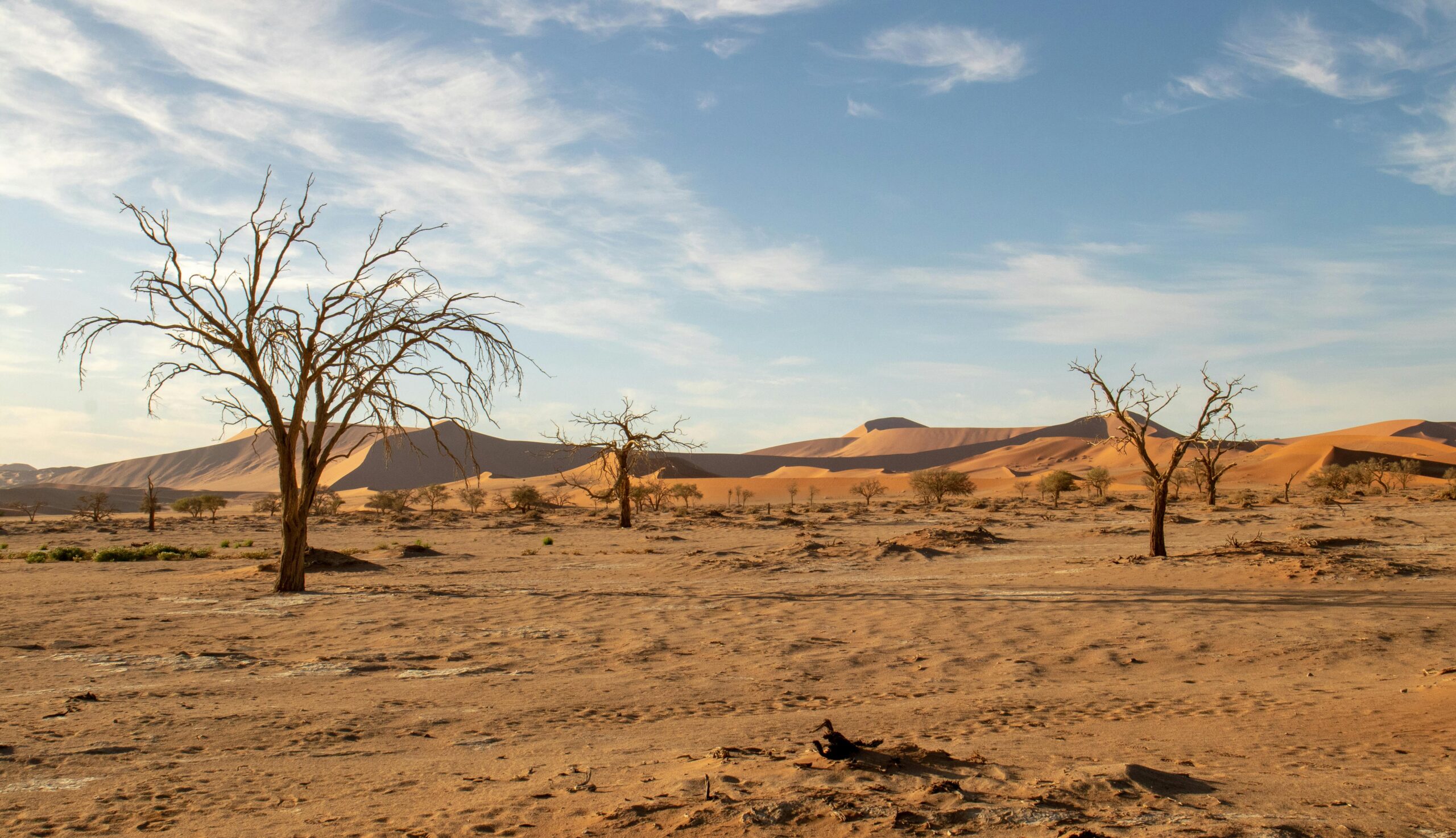
Mars’ barren landscapes may seem devoid of value requiring protection, but is this perception merely a failure of imagination? If we terraform Mars to make it habitable for humans, do we destroy something unique and irreplaceable—a planetary environment that took billions of years to develop?
The Preservation vs. Transformation Debate
Some ethicists argue for preserving at least some worlds in their natural state, creating cosmic wilderness preserves. Others contend that transforming lifeless worlds to support life increases the universe’s value. This debate mirrors Earth-based conflicts between conservation and development, but on a cosmic scale.
A middle path might involve careful assessment of each world’s unique characteristics. Europa’s subsurface ocean, potentially harboring life, deserves different consideration than a barren asteroid. Developing classification systems for celestial bodies based on their ethical status could guide decision-making.
🧬 Genetic Engineering and Space Adaptation
Adapting humans to survive in space environments may require genetic modification. Creating humans better suited to Mars’ lower gravity or higher radiation levels raises profound ethical questions about consent, human nature, and species identity.
Do we have the right to genetically modify future generations to suit extraterrestrial environments they didn’t choose? Conversely, do we have an obligation to provide space settlers with the best possible adaptations for their challenging environments?
The Question of Human Enhancement
Space exploration may drive acceptance of human enhancement technologies currently viewed with suspicion. If genetic modifications prove necessary for thriving on other worlds, it could fundamentally change our understanding of what it means to be human.
This scenario requires careful ethical frameworks that protect individual rights while acknowledging the unique demands of space environments. We need guidelines that prevent coercion while enabling those who choose space settlement to adapt successfully.
Time, Distance, and Moral Obligation ⏰
The vast distances and time scales involved in space exploration create unique ethical challenges. A distress signal from a Mars colony takes minutes to reach Earth; from deeper space, it could take years or decades. How do moral obligations change when immediate assistance is physically impossible?
Additionally, space missions may extend across generations. The ethics of embarking on centuries-long journeys to distant stars—committing unborn generations to life aboard spacecraft—requires frameworks that balance present autonomy with future welfare.
Intergenerational Justice in Space
We already grapple with intergenerational justice regarding climate change and resource depletion on Earth. Space exploration amplifies these concerns. Decisions made today about space activities will affect humans for millennia, yet those future people have no voice in current decision-making.
Ethical frameworks for space must incorporate robust consideration of long-term consequences, perhaps adopting principles like the “seventh generation” thinking of some Indigenous cultures, extended to even longer timeframes appropriate for cosmic endeavors.
🤝 Building Cosmic Ethics: A Collaborative Framework
Developing comprehensive ethics for space requires unprecedented global collaboration. No single nation, culture, or philosophical tradition can claim exclusive authority over cosmic moral questions. The challenge is fundamentally multicultural and interdisciplinary.
Effective cosmic ethics must integrate insights from philosophy, science, law, anthropology, and other fields. It must respect diverse cultural perspectives while identifying universal principles that can guide humanity’s expansion into space.
The Role of International Cooperation
Organizations like the United Nations Committee on the Peaceful Uses of Outer Space provide frameworks for international dialogue, but current structures may be insufficient for the ethical complexity ahead. We need new institutions specifically designed to address cosmic ethical questions with appropriate representation from all humanity.
These institutions should include not just governments and scientists, but ethicists, Indigenous peoples, environmental advocates, and representatives from diverse cultural and philosophical traditions. The goal is developing ethical frameworks that truly represent humanity’s best collective wisdom.
The Opportunity for Ethical Renewal 🌟
While space exploration presents enormous ethical challenges, it also offers an unprecedented opportunity for moral growth. The need to develop cosmic ethics forces us to clarify our values, confront our biases, and think more carefully about what truly matters.
Engaging with these questions can make us more ethical beings here on Earth. Considering our obligations to potential extraterrestrial life might enhance our respect for Earth’s biodiversity. Thinking about equitable distribution of space resources could inform more just economic systems on our home planet.
The ethical frontiers beyond Earth are ultimately mirrors reflecting our deepest values and aspirations. As we prepare to become a spacefaring species, we have the chance to consciously choose what kind of cosmic citizens we want to be—to write a moral code worthy of our expansion into the universe.

Moving Forward With Wisdom and Humility 🛸
The vast realms of other worlds await human exploration, but we must proceed with both ambition and caution. The ethical frameworks we develop now will shape humanity’s cosmic future for generations or millennia to come.
We should embrace this responsibility with appropriate humility, recognizing that our current understanding is limited and our perspectives inevitably constrained by our Earth-bound experience. Building in mechanisms for ethical evolution—creating flexible frameworks that can adapt as we learn more about the cosmos and our place in it—is essential.
The journey into space is ultimately a journey into ourselves, an exploration of human nature and values as much as of physical frontiers. By thoughtfully unlocking these ethical frontiers, we prepare not just to visit other worlds, but to become worthy inhabitants of a cosmos far grander than ourselves.
As we stand at this threshold, looking up at the stars, we face a choice: Will we export our worst tendencies into space, replicating patterns of exploitation and inequality on a cosmic scale? Or will we use this opportunity to become better—to develop ethical frameworks that honor the profound responsibility of expanding life and consciousness into the universe?
The answer will define not just humanity’s future among the stars, but the very meaning of what it means to be human in an age of cosmic possibility.